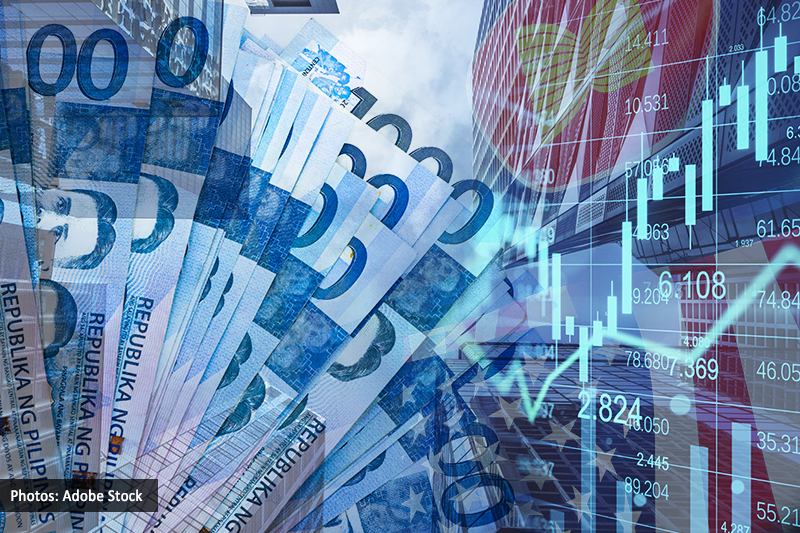
John Paolo Rivera, senior research fellow at state policy think tank òòò½´«Ã½ (òòò½´«Ã½), said the peso’s depreciation “signals pressure from a mix of global and domestic factors, namely delayed rate cuts abroad, a surprise policy-rate easing by the BSP that may have spooked markets, and persistent risk-off sentiment tied to governance and external shocks.”

To recall, the central bank decided to reduce key borrowing costs by another quarter of a point to 4.75 percent earlier this month.

Despite the BSP’s unchanged stance, Oikonomia Advisory and Research Inc. economist Reinielle Matt Erece said the central bank could intervene against the growing strength of the US dollar “by selling off dollar reserves to keep the exchange rate from reaching ₱60:$1.”

Erece noted that while the dovish stance of the US Federal Reserve (Fed) is seen to lift the peso, “continued pessimism toward the Philippine market due to corruption and economic growth concerns has sparked more dollar outflows. This is causing the peso to fall.”

Looking ahead, Rivera expects the forex rate to remain in the ₱58.5-₱59.5 range against the US dollar as markets await clearer signals from the Fed, incoming trade data, and the country’s external-sector flows.

He said a rebound toward ₱56.5-₱57.5 against the greenback in the medium term remains feasible, “assuming improved external receipts, stable remittances, and stronger policy credibility.”


*Please visit the original link above to read the full article.


Main Menu

Secondary Menu