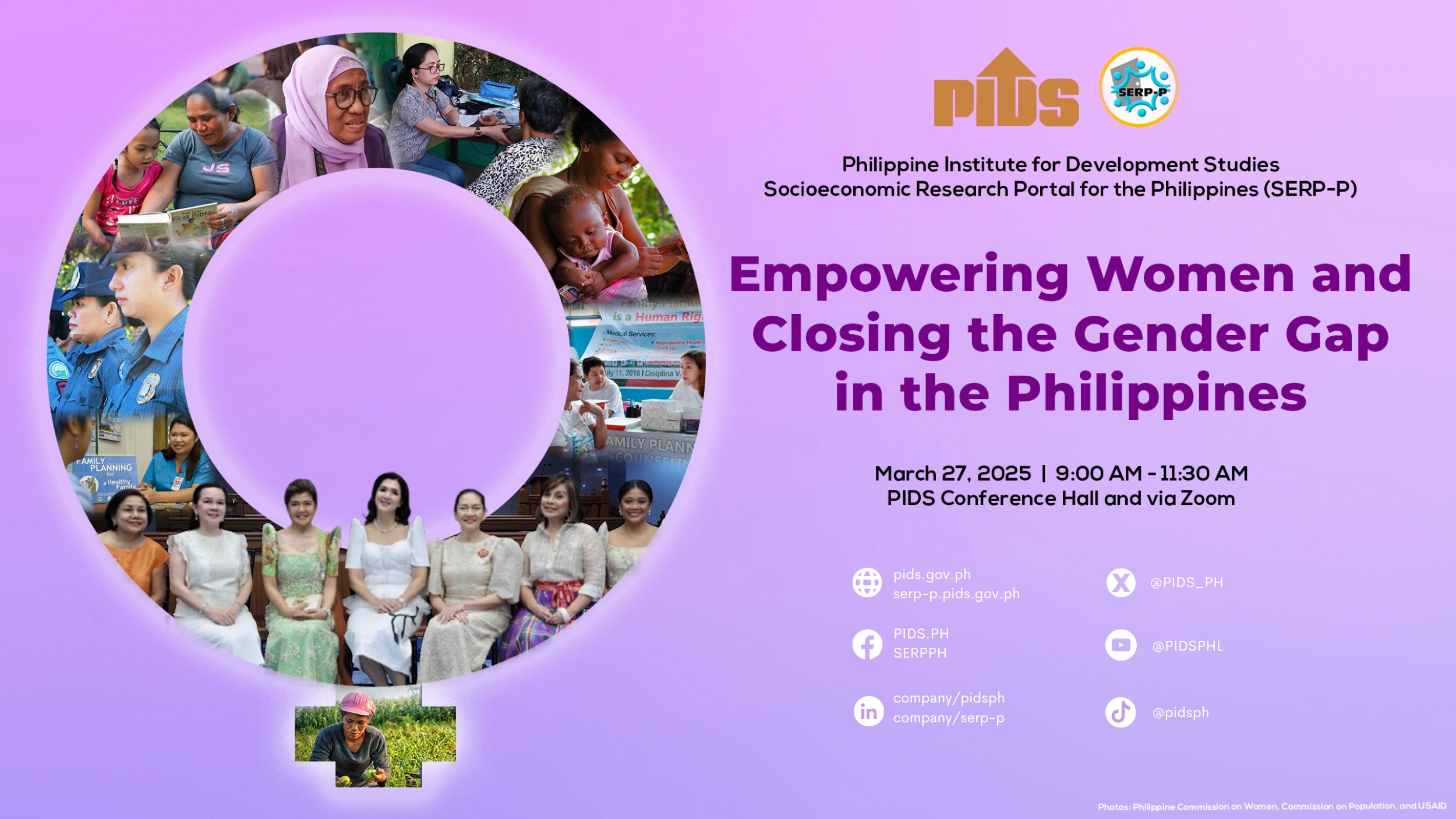
The Philippines is often regarded as a leader in gender equality due to its strong performance in international assessments, which highlight the country's relatively high levels of female educational attainment, a solid legal framework supporting gender equality, and the presence of women in professional and managerial roles.
Yet, despite these positive rankings, women in the Philippines still face challenges in accessing economic opportunities. Issues such as labor force participation, job security, and access to quality employment persist, with many women still outside the labor market and those who do work often finding themselves in informal, low-paying, or unstable jobs.
This Policy Note argues that although the Philippines has made strides in closing first-generation gaps, deeper, second-generation barriers rooted in institutions, societal norms, and structural issues persist. These barriers do not affect all women equally; they intersect with factors such as disability, geography, ethnicity, age, and the nature of the labor market, shaping who benefits from progress and who is left behind. To truly understand and address these challenges, this Note emphasizes the need to look beyond overall gender parity and focus on an intersectional analysis that reveals opportunities for all women.