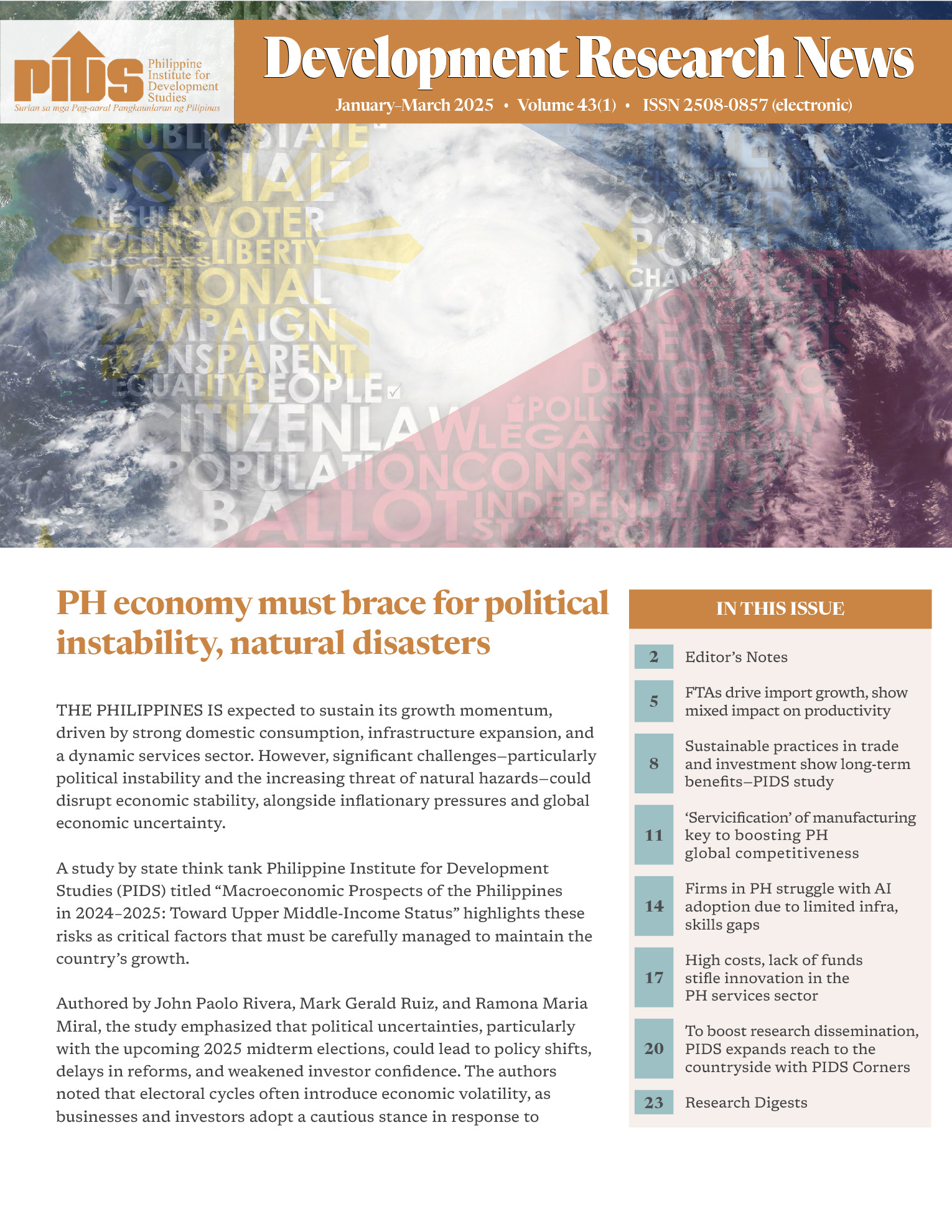
MANILA, Philippines — The ý (ý) has warned that the country’s economic growth could be derailed by the combined effects of climate change, weak disaster preparedness and persistent corruption.
The agency urged the government to shift from “reactive response” to proactive risk management and resilient infrastructure development.
ý senior research fellow John Paulo Rivera said that while the Philippine economy remains fundamentally strong, its growth prospects are “fragile” due to corruption and climate-related disruptions.
“Our economy has a strong foundation, but there is no guarantee of continuous growth due to issues of corruption and the effect of rapid climate change,” Rivera said. “We need to be prepared, not just reactive. Calamities should be prepared for even before they happen.”
Rivera noted that natural disasters repeatedly disrupt business operations, suspend classes and halt government services – clear signs the country remains unprepared for recurring calamities.
“Every time there’s heavy rain or strong winds, work and government services are suspended. This shows we lack preparedness because these events disturb normal economic activities,” he said.
He urged authorities to adopt a comprehensive “risk management” approach.
“When we say risk management, it means we act before the calamity strikes,” Rivera said. “If schools and houses are well-built and compliant with standards, we can prevent larger losses when disasters happen.”
He warned that failure to implement reforms could trap the country in a costly cycle of recovery, lost productivity and reduced investments.
Recommendations
ý recommended that the government invest more in disaster-resilient infrastructure and science-based forecasting technology to minimize climate-related economic disruptions.
Rivera warned that without stronger governance and infrastructure resilience, the Philippines could experience slower growth by 2026 as climate shocks, supply disruptions and investor uncertainty converge.
“The strength of the Philippine economy is not self-driving,” Rivera said. “It needs discipline, direction, and preparation – from our private sector, citizens, and the government.”